Best Android Browsers With Extensions in 2026
Compare the best Android browsers with extension support in 2026, including store compatibility, limitations, security, and setup options.

Kayla
Quetta Networks


Android browsers with extension support let you add password managers, productivity tools, translators, privacy controls, and other features that are normally associated with desktop browsing. However, extension support on Android varies widely. Some browsers connect to desktop extension stores, while others offer a smaller mobile add-on library or no extension installation at all.
This guide compares the main options available in 2026, explains their limitations, and helps you choose the right extension browser for your Android phone.
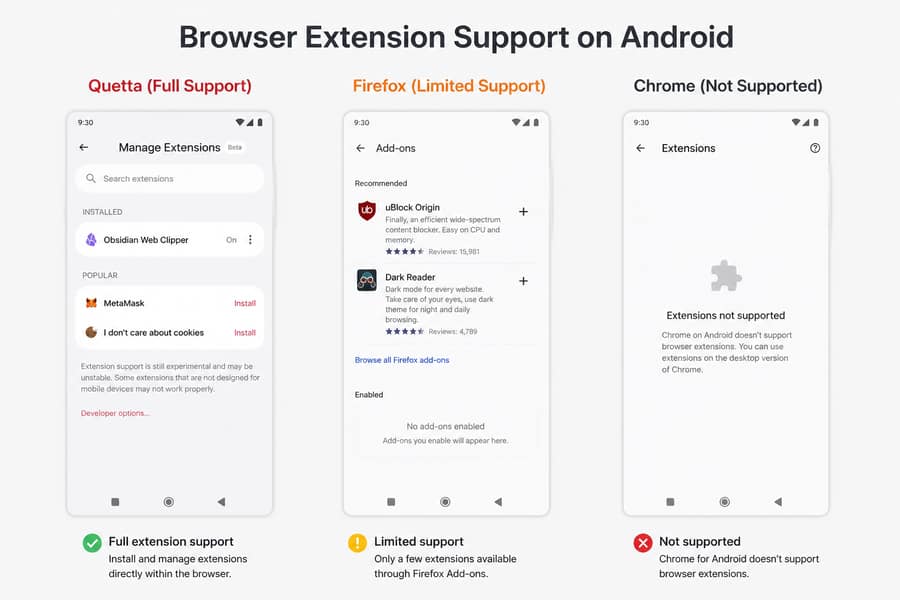
Quick answer: Quetta is designed for Android users who want access to extensions from the Chrome Web Store and Microsoft Edge Add-ons. Firefox for Android is a strong alternative for users who prefer Mozilla's add-on ecosystem. Chrome for Android does not offer the same desktop-style extension installation described in Google's desktop extension documentation. Compatibility can still vary by extension, browser version, and Android device. If you already have a specific add-on in mind, check which Chrome extensions actually work on Android before choosing a browser.
Best Android Browsers With Extensions at a Glance
Browser | Extension source | Chrome extension support | Best for | Main limitation |
|---|---|---|---|---|
Quetta Browser | Chrome Web Store and Microsoft Edge Add-ons | Supports many extensions, with mobile compatibility varying by add-on | Users who want Chromium extensions and built-in privacy tools | Some desktop extensions are not designed for a phone interface |
Firefox for Android | Mozilla Add-ons | No Chrome Web Store support | Users who prefer Mozilla's add-on ecosystem and permission controls | Uses Firefox add-ons rather than Chrome extensions |
Yandex Browser Alpha | Chromium extension stores, according to its current app listing | Experimental support | Users willing to test an alpha browser | Alpha software may be less stable and compatibility can change |
Chrome for Android | No desktop-style extension installation | No | Users who prioritize Chrome sync and Google services | Does not provide the desktop Chrome Web Store experience on Android |
Kiwi Browser | Historically supported Chrome extensions | Verify the current build and maintenance status before use | Existing Kiwi users and testing | Distribution, updates, and long-term maintenance should be checked first |
The best choice depends on the extensions you need. Before changing browsers, make a short list of your essential add-ons and confirm that each one installs, opens, and works correctly on mobile.
What Is an Android Browser With Extensions?
An Android browser with extensions can install add-ons that change or expand how the browser works. Extensions may fill passwords, translate pages, save research, modify website content, block trackers, or add productivity controls. The browser must provide both an installation method and the APIs that the extension needs to run.
Extension support is not a simple yes-or-no feature. A browser may install an extension successfully, but one of its functions, such as a popup, keyboard shortcut, background task, or desktop-only interface, still works differently on a phone.
Can You Install Chrome Extensions on Android?
You cannot install desktop Chrome extensions directly in the standard Chrome for Android app. Google's own Chrome Web Store instructions describe adding extensions to Chrome on a desktop computer. To use Chrome Web Store extensions on Android, you need a mobile browser that explicitly supports them.
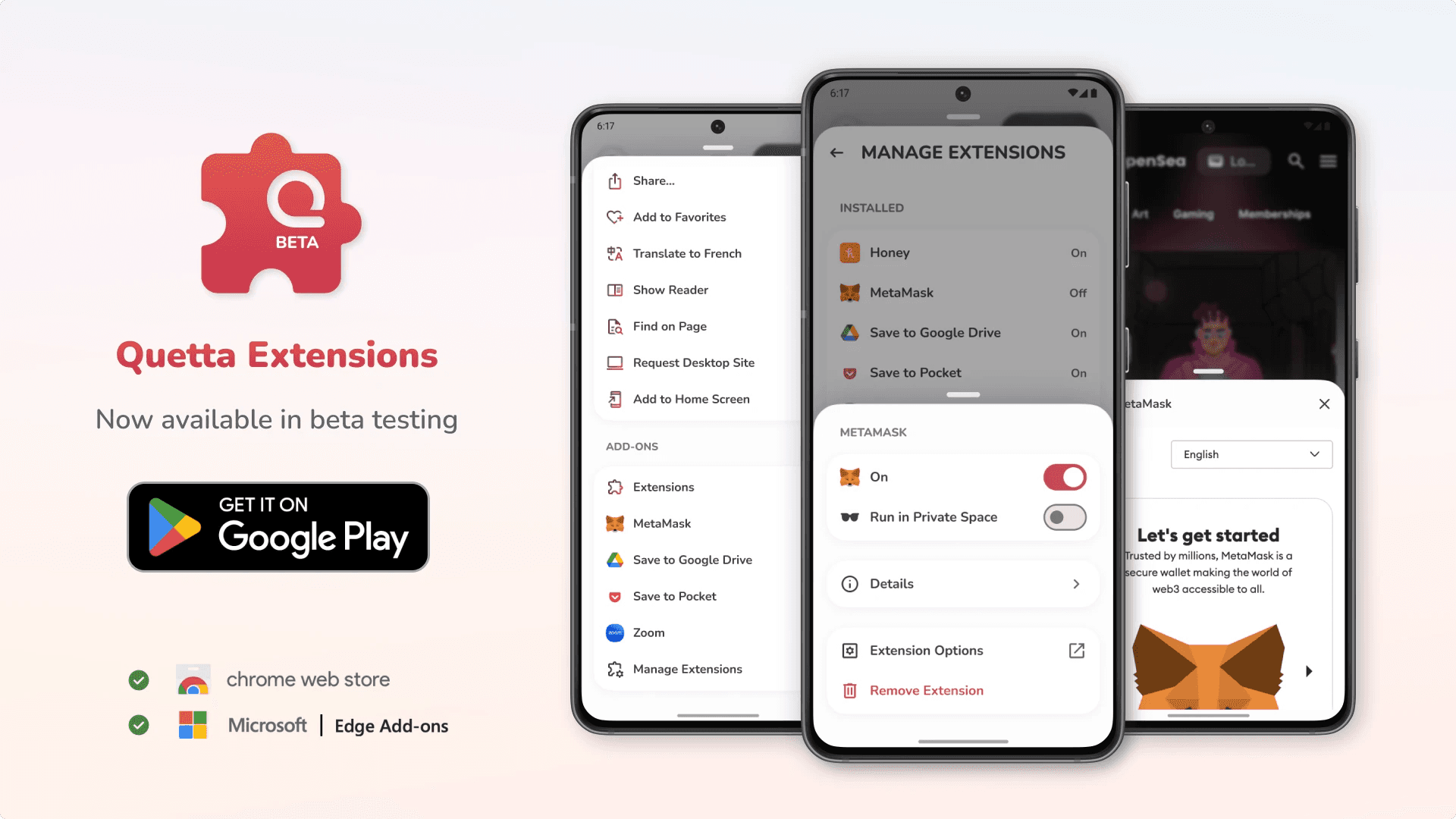
Quetta provides Android extension support and access to extensions from the Chrome Web Store and Microsoft Edge Add-ons. Because many extensions were originally designed for desktop screens, successful installation does not guarantee that every feature will be mobile-friendly.
For detailed setup instructions, see how to use browser extensions on an Android phone.
For extension-by-extension limitations, mobile API requirements, and a practical testing checklist, read Chrome Extensions on Android: Which Browsers Actually Support Them?.
How We Evaluated Android Extension Browsers
This comparison focuses on six factors that affect real mobile use:
Extension source: Whether the browser uses the Chrome Web Store, Microsoft Edge Add-ons, Mozilla Add-ons, or another source.
Installation flow: How easily a user can find, install, open, disable, and remove an extension.
Mobile compatibility: Whether extension popups, page controls, permissions, and background functions work on Android.
Permission visibility: Whether users can review and manage the sites and data an extension can access.
Browser maintenance: Whether the browser and its extension engine continue to receive updates.
Built-in tools: Whether the browser already includes features such as ad blocking, tracker protection, or video downloading that may reduce the need for extra extensions.
Extension behavior changes as browsers and extension standards are updated. This guide was reviewed in 2026. For important work or security-sensitive extensions, confirm support using the latest browser release and the extension developer's documentation.
1. Quetta Browser: Best for Chrome and Edge Extension Access
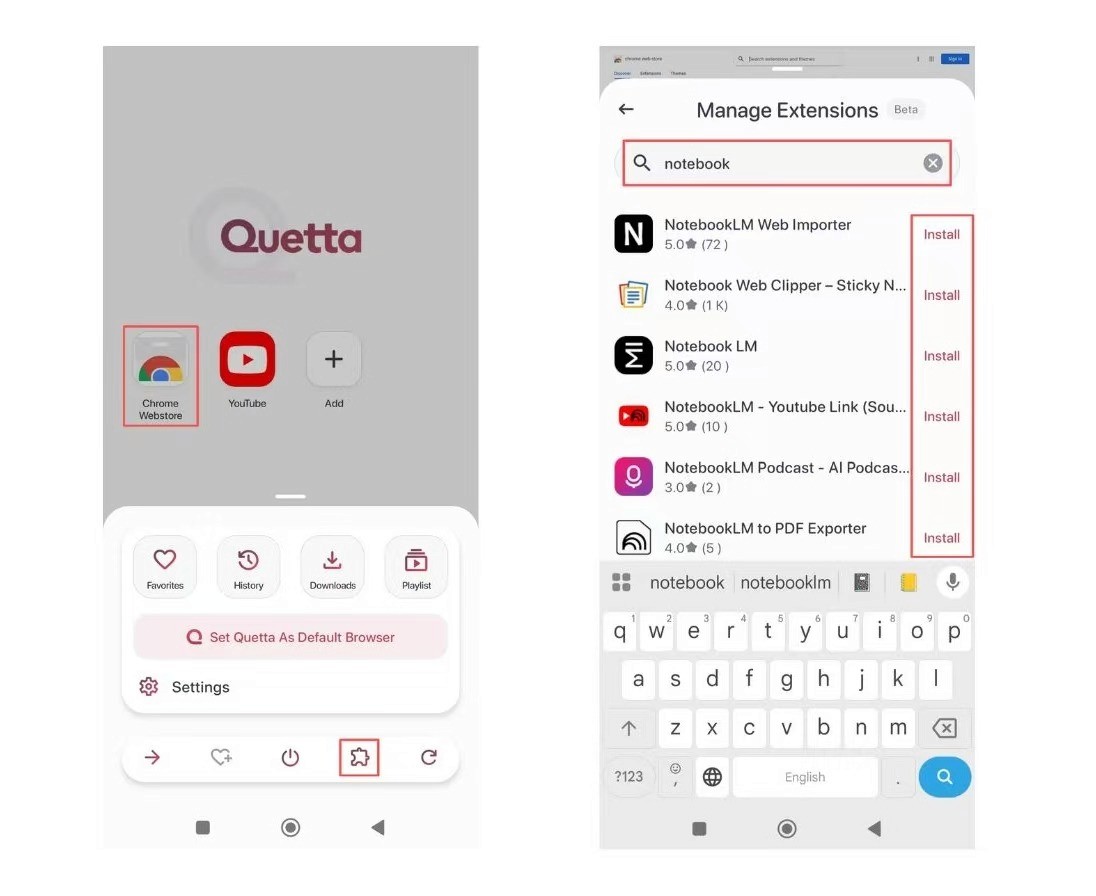
Quetta is an Android browser built around desktop-style extension access. Users can browse extensions from the Chrome Web Store and Microsoft Edge Add-ons, then manage installed extensions inside the browser. This makes it suitable for people who already rely on Chromium-based password managers, research tools, productivity add-ons, or page customization extensions.
Quetta also includes built-in tools such as ad blocking and privacy controls. A built-in feature may be more convenient than installing an extra extension for every task. If ad blocking is your main requirement, compare the trade-offs in built-in ad blockers versus extensions on Android.
Where Quetta works well
Access to both the Chrome Web Store and Microsoft Edge Add-ons
Extension management designed for an Android interface
Built-in privacy, ad-blocking, and downloading tools
Useful for people moving extension-based workflows from desktop to mobile
Quetta limitations
Some extensions depend on desktop layouts, mouse interactions, or browser APIs that behave differently on Android
Compatibility varies by extension and can change after an extension update
Installing many active extensions may increase memory use or affect browsing performance
Quetta is a good fit when extension choice matters more than staying inside the standard Chrome app. Learn more about using Chrome and Edge extensions with Quetta, or visit the Quetta Android product page.
2. Firefox for Android: Best for Mozilla Add-ons
Firefox for Android supports extensions through Mozilla's add-on ecosystem. Mozilla documents two installation paths: users can browse Android-compatible extensions on addons.mozilla.org or open the Extensions Manager inside Firefox. The browser also lets users review extension details, permissions, and private-browsing access.
Firefox does not install extensions from the Chrome Web Store. It is a better choice for users whose required tools are available as Firefox add-ons and who prefer Mozilla's extension model.
Where Firefox works well
Clear Android extension installation and management flow
Add-ons distributed through Mozilla's ecosystem
Permission and private-browsing controls
Suitable for users who already use Firefox across devices
Firefox limitations
Chrome Web Store extensions cannot be installed directly
A Chrome extension may not have a Firefox equivalent
The Android version of an add-on may differ from its desktop version
Before switching, search Mozilla Add-ons for Android for the password manager, privacy tool, or productivity extension you need.
3. Yandex Browser Alpha: An Experimental Chromium Option
The current Google Play listing for Yandex Browser Alpha states that it can use Chromium extension stores. This makes it relevant to Android users testing Chromium-based extensions, but the alpha label matters. Experimental builds can change quickly and may be less appropriate for a primary browser or sensitive workflows.
Where Yandex Browser Alpha may fit
Testing selected Chromium extensions on Android
Users who are comfortable with experimental software
Comparing extension behavior across Chromium-based browsers
Yandex Browser Alpha limitations
Alpha software can contain unfinished features or compatibility problems
Extension behavior may change between releases
Users should review the browser's privacy settings, developer information, and update history before adopting it
Use the official Yandex Browser Alpha Google Play listing to confirm current availability and release details.
4. Chrome for Android: Strong Sync, No Desktop Extension Experience
Chrome for Android is a strong option for Google account sync, familiar navigation, and broad website compatibility. It is not the right choice when desktop Chrome extensions are essential. Google's extension installation documentation describes customizing Chrome on a desktop, not installing desktop extensions in the standard Android app.
If you only need ad blocking, translation, password filling, or another common function, check whether Chrome or Android already provides it without an extension. If you need a specific Chrome Web Store add-on, choose an Android browser that explicitly supports that store.
5. Kiwi Browser: Treat It as a Legacy or Verification-Required Option
Kiwi became well known for running Chrome extensions on Android. Its status and distribution have changed over time, so users should confirm the source of the current build, its update history, and security maintenance before using it as a primary browser.
Existing Kiwi users should identify the extensions they depend on before migrating. Our guide to the best Kiwi Browser alternatives compares replacement options and migration considerations.
Why Built-In Browser Features Still Matter
Extensions provide flexibility, but they also add another developer, permission set, and update cycle to your browser. If a browser already provides a reliable feature you need, the built-in option may require less setup and maintenance.
For example, a built-in ad blocker can work immediately without asking the user to select an extension, review a third-party publisher, or configure filter lists. An extension may offer more customization, but it can also request broad access to websites and browsing data. Choose based on control, trust, and compatibility rather than the number of extensions alone.
How Do You Install Browser Extensions on Android?
Open your browser's supported extension store, verify the publisher, review the requested permissions, and install the add-on. Then open it from the browser's extension manager and test its main function on a normal webpage. For browser-specific instructions, permission management, removal, and troubleshooting, follow the complete guide to installing and using browser extensions on Android.
How to Choose Safe Browser Extensions
An extension can read or change web content only when the browser and user grant the necessary permissions. Before installing one, check:
Developer identity: Confirm that the publisher matches the official company or project.
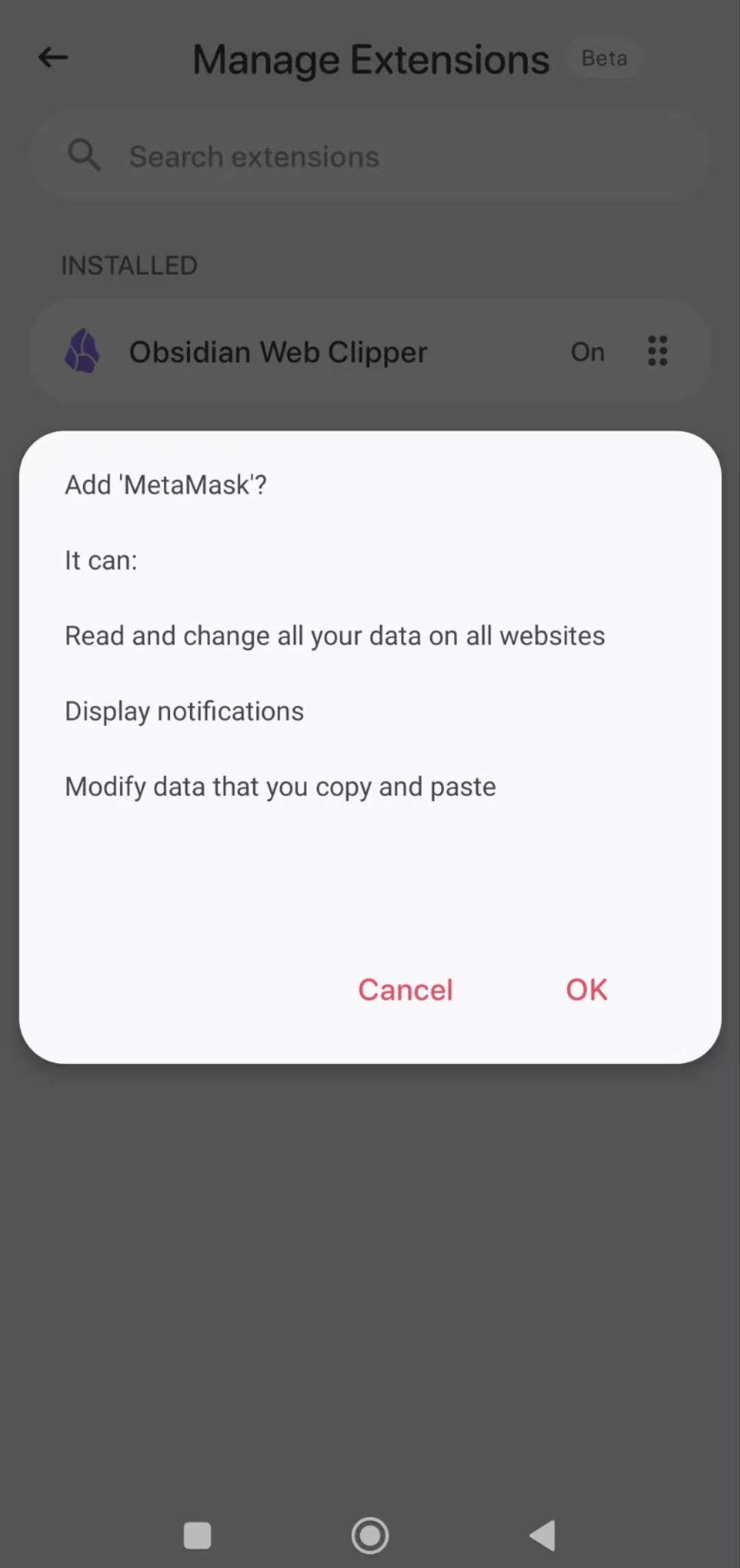
Requested permissions: Be cautious when a simple tool asks to read data on every website.
Update history: Prefer extensions that are actively maintained and compatible with current browser standards.
Privacy policy: Check what data the extension collects, stores, or shares.
Mobile usability: Confirm that buttons, popups, and settings work on a phone screen.
Actual need: Remove extensions you no longer use to reduce permissions and background activity.
Read the complete guide to choosing the right browser extensions for your workflow.
Best Android Extension Browser by Use Case
Use case | Recommended starting point | Why |
|---|---|---|
Chrome Web Store or Edge Add-ons | Quetta | Designed to provide access to Chromium extension stores on Android |
Mozilla add-ons | Firefox for Android | Official Android add-on manager and Mozilla extension ecosystem |
Experimental Chromium extension testing | Yandex Browser Alpha | Current app listing references Chromium extension stores |
Google sync without extensions | Chrome for Android | Familiar Google account and Chrome ecosystem |
Moving away from Kiwi | Quetta or Firefox | Active alternatives with different extension ecosystems |
This table is a starting point, not a guarantee that a particular extension will work. Test the exact extension you need before moving passwords, work accounts, or other sensitive activity to a new browser.
Common Extension Problems on Android
An Android extension may install but fail to open, display a desktop-sized popup, slow down browsing, or lose features that depend on desktop APIs and background processes. For step-by-step fixes, see how to troubleshoot Android browser extensions. To determine whether the add-on itself is mobile-compatible, use the Chrome extension compatibility checklist for Android.
Frequently Asked Questions
Which Android browser supports the most extensions?
The answer depends on whether you mean Chrome extensions or Android-compatible add-ons. Quetta provides access to extensions from the Chrome Web Store and Microsoft Edge Add-ons. Firefox for Android uses Mozilla's add-on ecosystem. The number of available extensions matters less than whether your required extensions work correctly on mobile.
Can I install Chrome extensions in Chrome on Android?
No. The standard Chrome for Android app does not provide the same desktop Chrome Web Store extension installation experience. Use a mobile browser that explicitly supports Chrome extensions, then verify each extension's Android compatibility. See which browsers actually support Chrome extensions on Android.
Can I use Microsoft Edge extensions on Android?
Quetta provides access to Microsoft Edge Add-ons on Android. Compatibility still varies because some Edge extensions were designed for desktop browsers. Test the extension's popup, permissions, and primary feature after installation.
Are browser extensions safe on Android?
Browser extensions can be safe when they come from a trusted publisher, request reasonable permissions, and receive active updates. They can also access sensitive page data when granted broad permissions. Review the developer, privacy policy, permission list, and update history before installing an extension.
Do Android browser extensions slow down the browser?
They can. Extensions that run on every page, maintain background tasks, or process large amounts of content may use memory and battery. Keep only the extensions you use, and disable them one at a time when troubleshooting performance.
Do all desktop extensions work on Android?
No. Some desktop extensions rely on wide popup interfaces, mouse actions, keyboard shortcuts, native desktop applications, or APIs that are unavailable on Android. A browser may install an extension even when one or more features do not work correctly on mobile.
Is a built-in ad blocker better than an extension?
A built-in ad blocker is usually easier to set up and maintain, while an extension may offer more filter choices and advanced controls. The better option depends on whether you prioritize simplicity, customization, privacy, or compatibility.
Which Android Browser With Extensions Should You Choose?
Choose the browser that supports the extensions you actually use, provides clear permission controls, and receives regular updates. Quetta is designed for users who want Chrome Web Store and Microsoft Edge Add-ons on Android. Firefox is a strong choice for Mozilla add-ons. Chrome remains useful for Google sync, but not for desktop-style extension installation.
Start by testing one essential extension rather than installing your entire desktop collection. Confirm that its interface, permissions, and main function work on your phone, then add other extensions gradually.
Explore Quetta's Android extension support or download Quetta for Android.