Best Browser for Freelancers: What to Look For in 2026
Compare browsers for freelance work by compatibility, extensions, privacy, performance and mobile support—and choose the right fit for your workflow.
Kayla
Quetta Networks


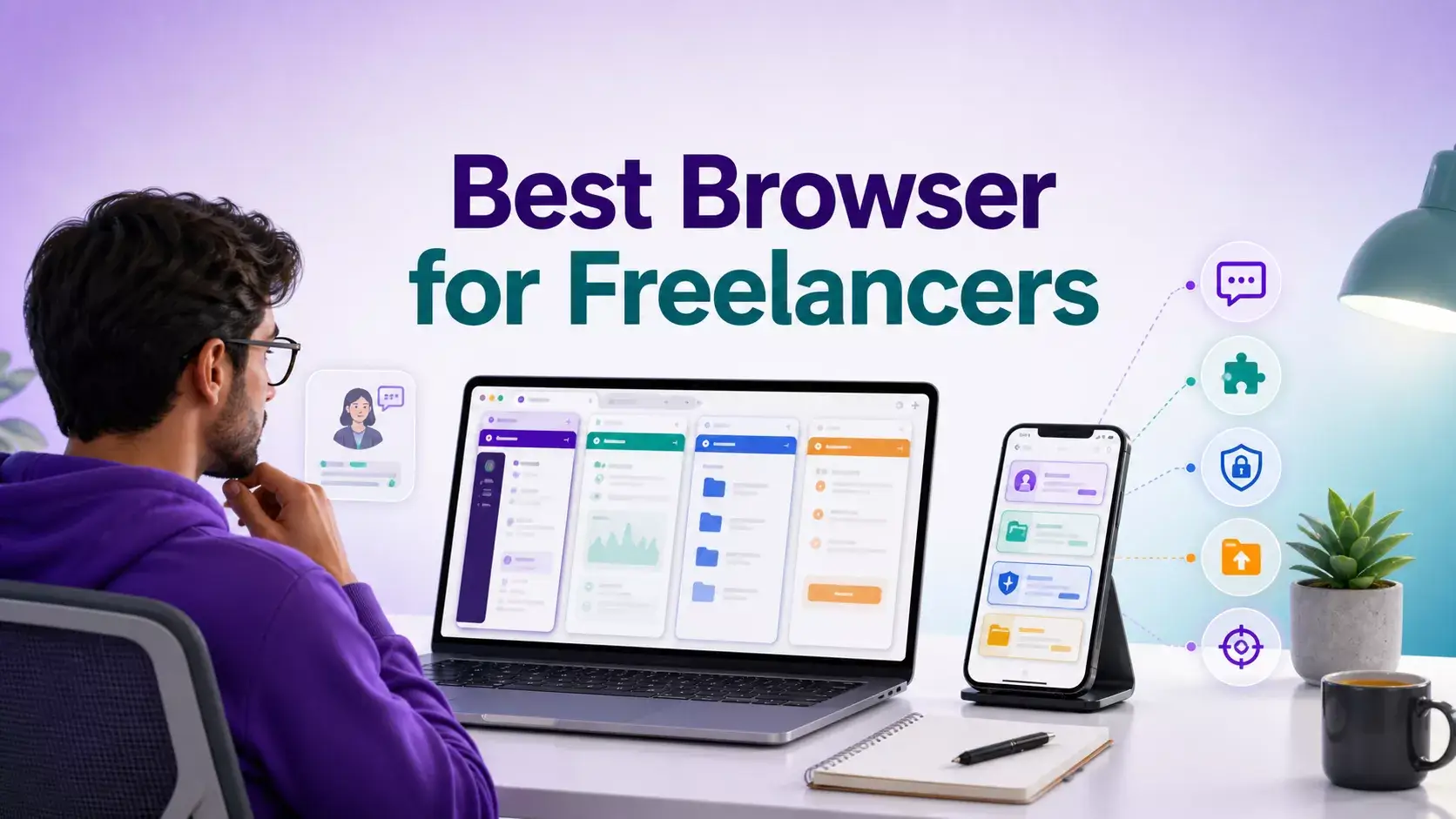
The best browser for a freelancer is the one that reliably runs essential client websites, supports the tools the freelancer actually uses, protects work accounts, and performs well on the devices used each day. Chrome, Edge, Firefox, Safari, Brave, Vivaldi and Quetta serve different workflows; no single browser is best for every freelancer.
If most of your billable work happens on a desktop, prioritize web-app compatibility, profiles and tab management. If you regularly find jobs, reply to clients, research, translate or review work from an Android phone, mobile extension support and usable privacy controls may matter more.
Quick recommendation: Keep a widely supported desktop browser for platform-critical tasks, then choose a mobile browser around the work you actually perform away from your desk. Quetta is worth considering for Android-based freelance work that benefits from supported extensions, built-in ad blocking and adjustable privacy controls.
What should freelancers look for in a browser?
A browser for freelance work should be evaluated as working infrastructure, not as a lifestyle accessory. Use these six criteria.
1. Compatibility with client and freelance platforms
Start with the sites that directly affect your income: freelance marketplaces, client portals, cloud documents, video meetings, payment services and authentication pages.
Platform support can be narrower than general web compatibility. For example, Upwork currently documents support for the latest two major versions of Chrome, Edge, Firefox and Safari, with different availability across desktop, Android and iOS. That does not automatically mean every other Chromium-based browser will fail, but it does mean you should keep a supported fallback for contracts, identity checks or other critical actions. See Upwork's current browser requirements before choosing a browser around that platform.
2. Extension support
Extensions can add password management, writing assistance, translation, time tracking, screenshots, and tab organization. They can also read sensitive webpage data when granted broad permissions.
Choose a browser that supports the extension source and browser APIs your tools require. Then test each important extension on the exact device you plan to use. An extension may install successfully but still depend on desktop layouts or APIs that behave differently on mobile.
For a task-based shortlist, see our guide to the best browser extensions for freelancers.
3. Separation between personal and client work
Freelancers often move among personal email, multiple client accounts, staging sites and financial tools. Browser profiles, separate browser installations or carefully separated sessions reduce accidental account crossover.
The browser does not need the most elaborate workspace system. It needs a separation method you can understand and repeat without signing into the wrong client account.
4. Privacy and client-data controls
Private browsing is not a complete security strategy. A work browser should let you review site permissions, manage cookies, restrict unnecessary extension access, and clear local data when appropriate.
These controls reduce particular risks; they do not make you anonymous, replace multi-factor authentication or override a client's security policy. Freelancers handling client credentials should follow a layered client-data protection checklist.
5. Performance on your actual device
Marketing benchmarks rarely reproduce your combination of hardware, extensions, and web apps. Test the browser using a representative work session:
Open your normal communication and document tools.
Join a test video call.
Upload and download a non-sensitive sample file.
Use your required extensions.
Measure memory, battery use and responsiveness over an hour.
6. Desktop and mobile continuity
Some freelancers only need messages and notifications on mobile. Others write, research, review designs, manage websites or submit proposals from a phone. Define which tasks must work on each device before comparing browsers.
Browser options for freelancers compared
The following table is a decision framework, not a universal ranking. Features and platform support change, so verify current product documentation before switching.
Browser | Strong fit | Main consideration |
|---|---|---|
Chrome | Broad website compatibility and familiar desktop extension ecosystem | Standard Chrome on Android does not run desktop Chrome extensions inside the mobile browser |
Edge | Windows-centered workflows and Microsoft services | Some features provide the most value inside the Microsoft ecosystem |
Firefox | Independent browser engine and Mozilla add-on ecosystem | Confirm that each required site and add-on supports your platform |
Safari | Freelancers working mainly across Apple devices | Availability is limited to the Apple ecosystem |
Brave | Users prioritizing built-in blocking and privacy defaults | Test client sites that depend on cookies or scripts and create narrow exceptions when necessary |
Vivaldi | Desktop power users who value customization and tab organization | Its dense interface may be more configuration than a simple workflow needs |
Quetta | Android freelancers who want supported Chrome/Edge extensions, built-in ad blocking and adjustable privacy controls | Extension behavior can vary on mobile; keep a supported fallback for platform-critical tasks |
What is the best browser for freelancers on Android?
The best Android browser for a freelancer must do more than open webpages. It should handle logins, file transfers, client messages, research, and the specific web tools used between desktop sessions.
Quetta supports many extensions from the Chrome Web Store and Microsoft Edge Add-ons on Android. Compatibility still varies because some extensions expect desktop-only interfaces or APIs. Quetta also provides built-in ad blocking and Privacy Guard controls, which can reduce distractions and supported tracking without requiring a separate extension for every function.
Read the full Android browser comparison for freelancers before using any mobile browser as your only access to paid work.
Working from Android? Explore Quetta Browser if your mobile workflow needs supported extensions, fewer intrusive page elements and adjustable privacy controls. Test your essential client sites before making it your primary work browser.
Which browser is best for managing multiple clients?
For multiple clients, separation matters more than the browser logo. A reliable setup may use browser profiles on desktop, separate browser installations on mobile, a password manager, client-specific bookmark folders and a documented fallback browser.
Do not stay permanently signed in to every client account merely to save a few seconds. That increases the chance of sending from the wrong identity, granting an extension access to unrelated accounts or exposing a session when someone else handles the device.
Our freelance browser setup guide provides a repeatable configuration.
Which browser is best for privacy-sensitive freelance work?
No ordinary browser can guarantee that client work is private. Websites can still record signed-in activity, services may retain server-side data, and network operators may observe connection information.
Look for controls that address specific risks:
Site permissions for camera, microphone, location and notifications
Cookie and tracker controls with per-site exceptions
Extension permission visibility
Secure-connection preferences
Protection for selected local browser data
Clear documentation of what the browser does and does not protect
Quetta's Privacy Guard combines supported tracker prevention, cookie and script controls, fingerprinting protection, secure-connection preferences and Data Vault protection for selected local browser data. These are layers, not an anonymity guarantee.
A practical browser decision checklist
Score each candidate from 0 to 2 for every requirement: 0 means unsuitable, 1 means workable with limitations, and 2 means a strong fit.
Requirement | Weight |
|---|---|
Essential freelance sites work correctly | 5 |
Required extensions work on your device | 4 |
Account separation is understandable | 4 |
File upload, download and meeting tools work | 4 |
Site and extension permissions are controllable | 3 |
Performance remains acceptable during a real work session | 3 |
A supported fallback is available | 2 |
Multiply each score by its weight. Reject any browser that scores 0 for an income-critical site, even if its total is high.
Frequently asked questions
Is Chrome the best browser for freelancers?
Chrome is a practical choice when broad website compatibility and desktop extensions are the priority. It is not automatically best for every freelancer, especially when Android extension support, Apple integration, customization or stronger built-in blocking controls matter more.
Can freelancers work entirely from a mobile browser?
Some freelancers can handle research, messaging, documents and proposals from a mobile browser, but platform-specific onboarding, time tracking, video meetings, or specialist tools may still require a supported desktop browser or native app. Test the complete paid workflow before relying on mobile alone.
Is Quetta officially supported by Upwork?
Upwork's published support page lists specific browser families and versions. Quetta should not be described as officially supported unless Upwork adds it to that documentation. A freelancer can test website access in Quetta while retaining a listed browser for critical actions.
Do browser extensions make freelance work safer?
Some extensions improve password handling or workflow security, but extensions can also request access to tabs, history, and webpage data. Install only trusted tools, review their permissions, and remove extensions you no longer use.
Should I use a separate browser for client work?
A separate browser or profile can reduce account mix-ups and separate client sessions from personal browsing. It does not replace device encryption, updates, secure passwords, multi-factor authentication, or client security requirements.
Choose around the work, not the label
The right freelancer browser is the one that passes your real compatibility and security tests. Desktop-first freelancers may prioritize broad platform support and profiles. Android-heavy freelancers may place greater value on mobile extensions, privacy controls, and a cleaner browsing environment.
If that second workflow describes you, explore Quetta for Android and test it with non-sensitive sample tasks before moving critical client work.