Best Android Browser for Freelancers: A Practical 2026 Guide
Choose an Android browser for freelance work by testing platform compatibility, extensions, files, meetings, privacy controls and battery use.
Kayla
Quetta Networks


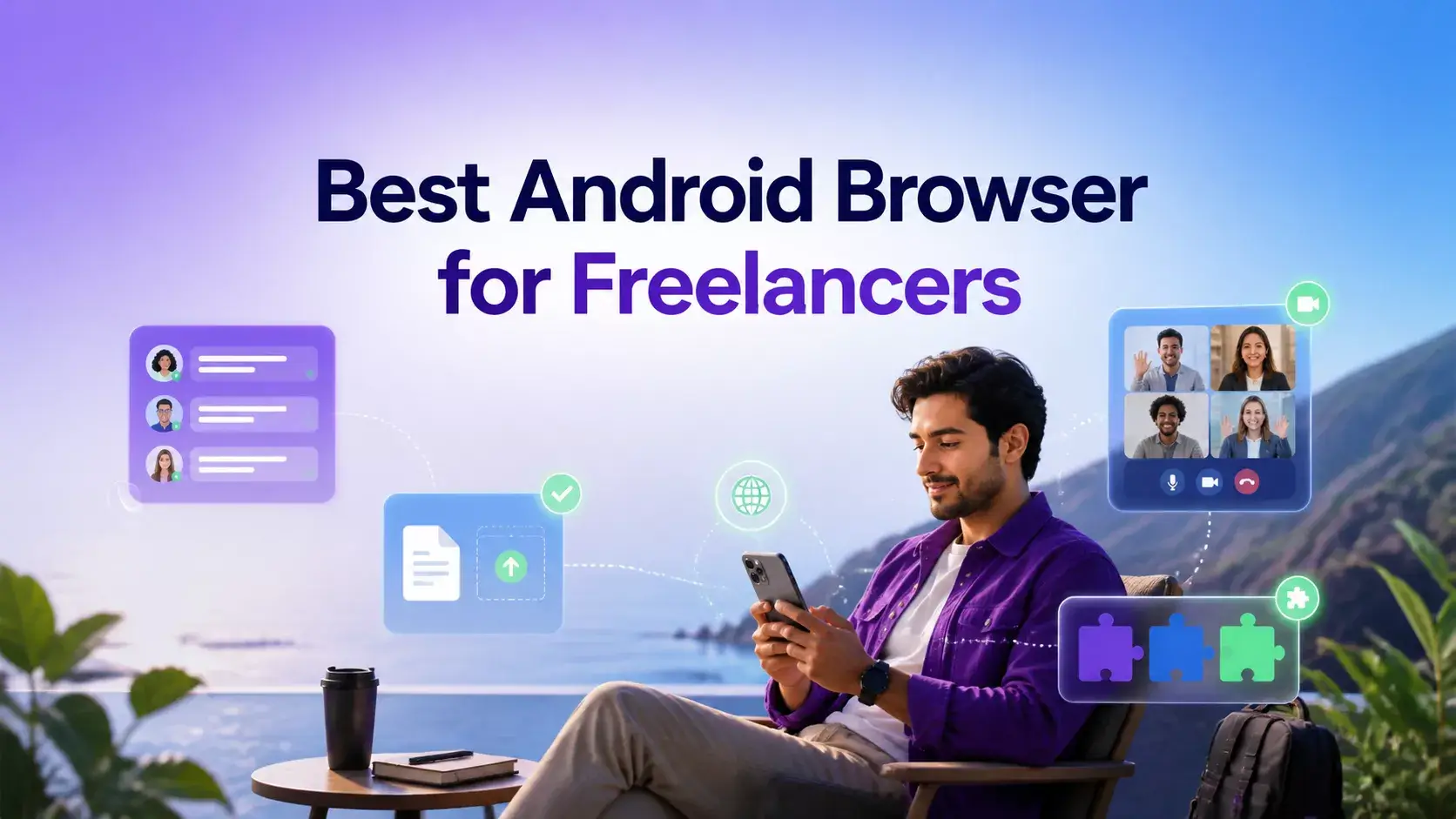
The best Android browser for a freelancer is the one that completes the freelancer's real mobile workflow without breaking essential sites. Test client messaging, file uploads, authentication, web apps, meetings, and required extensions. Chrome offers the clearest documented support on many platforms; alternatives may add useful blocking, privacy, or extension capabilities.
This guide is for freelancers who perform meaningful work on an Android phone—not just people who occasionally check a notification.
For the broader desktop-and-mobile decision, compare the best browsers for freelancers.
Start with the work you must complete
Write down five mobile tasks that affect revenue. A typical list might include:
Sign in to a freelance marketplace and reply to a client.
Open a shared document or project board.
Upload a draft and download feedback.
Join a video call with microphone and camera permissions.
Use a password manager, translator or writing assistant.
If a browser fails one of these tasks, a long feature list does not make it the best browser for your work.
Android browser criteria for freelance work
Freelance-platform compatibility
Check the platform's official requirements before relying on an alternative browser. Upwork currently lists Chrome on Android among its supported options and says it supports the latest two major versions of its listed browsers. Keep a documented, supported fallback when contracts, payments or identity checks are involved. See Upwork's supported-browser page.
File handling
Test a harmless sample upload and download. Confirm that you can select the correct file, see upload progress, find downloaded documents and open them in the intended app. Do not discover a file-picker limitation five minutes before a deadline.
Extension support
Standard Chrome on Android does not run desktop Chrome extensions in the mobile browser; Google's `Add to Desktop` workflow sends an extension to desktop Chrome. Other Android browsers may support extensions, but compatibility depends on the extension's APIs and interface.
Quetta supports many extensions from the Chrome Web Store and Microsoft Edge Add-ons on Android. That makes it a relevant option when a mobile workflow depends on extensions, but every essential extension should still be tested. See Quetta's current extension documentation and our general Android extension guide.
Site permissions and privacy controls
Freelance work often requires temporary camera, microphone, location or notification access. Prefer a browser that makes those permissions visible and reversible. Strong blocking can also break logins or embedded tools, so use narrow exceptions instead of disabling protection everywhere.
Performance and battery use
Test your actual workload. Open the same work tabs, run the same call and use the same extensions on each candidate. Record battery use, heat, reloads and responsiveness. A synthetic benchmark cannot tell you whether your project board will repeatedly unload in the background.
Android browser options compared
Option | Useful when | Verify before relying on it |
|---|---|---|
Chrome | You need the most clearly documented Android support on common work platforms | Desktop extensions do not run inside standard Chrome for Android |
Edge | Your work centers on Microsoft accounts and services | Confirm each web app and mobile feature you need |
Firefox | You prefer Mozilla's mobile browser and supported add-on catalog | Required add-ons and client sites may differ from Chromium workflows |
Brave | You value built-in blocking defaults | Create per-site exceptions for legitimate login or payment dependencies |
Quetta | You want to test Chrome/Edge extensions on Android plus built-in ad blocking and privacy controls | Extension and client-site compatibility must be tested individually |
This is not an absolute ranking. The winning browser is the one that passes your paid-work test.
A 20-minute compatibility test
Run this test with non-sensitive sample data:
Update the browser and Android.
Sign in to a test or low-risk work account.
Open your main marketplace, email, document and meeting tools.
Upload and download a sample PDF.
Test camera, microphone and notification permissions.
Install only one required extension and review its permissions.
Repeat a normal task for ten minutes.
Sign out, clear the test data if appropriate and record failures.
Keep a second browser installed until the new setup has survived real work for at least a week.
Need mobile extension support? Explore Quetta Extensions to see the supported sources and current limitations, then test your essential tools before switching.
When a native app is better than a browser
A mobile browser is not always the right interface. Native apps may provide more reliable notifications, background uploads, calls, or biometric authentication. Upwork, for example, documents a freelancer app for many on-the-go tasks while noting that some Enterprise onboarding still requires a browser.
Use the browser when you need the full webpage, an extension, a desktop-style workflow, or a feature missing from the app. Use the app when it offers a more reliable mobile experience. A mixed workflow is often more resilient than forcing every task into one tool.
Frequently asked questions
Can Chrome extensions run on Android?
Standard Chrome for Android does not run desktop Chrome extensions inside the mobile browser. Some alternative Android browsers support extensions, but compatibility varies by browser, API, and interface.
Is Quetta the best Android browser for every freelancer?
No. Quetta is a relevant option for freelancers who value supported mobile extensions, ad blocking and adjustable privacy controls. Freelancers whose income-critical platform officially supports another browser should retain that supported option and compare both using real tasks.
Can strong privacy settings break freelance sites?
Yes. Blocking third-party cookies or scripts can affect sign-in, payments, or embedded tools. Upwork, for example, documents that third-party cookies may be needed for full functionality. Prefer a narrow site exception after confirming the domain rather than weakening settings globally.
Should I store client passwords in the browser?
Use a reputable password manager that fits the client's policy, protect it with strong authentication, and do not share credentials through ordinary notes or messages. The browser choice is only one part of account security.
Make the decision with evidence
Choose an Android browser only after it completes your five revenue-critical tasks. If Quetta's extension and privacy capabilities match your needs, learn how Quetta works and run the same compatibility test. If another browser performs the work more reliably, keep it as your primary or fallback.